
Ricki is one of my four bantam (miniature) chickens. She’s tiny, white, and generally a little ditzy. Definitely not as personable as soft, dove-grey JC, who would much prefer to live in the house with us. These three small hens are the only ones my equally tiny Silkie rooster, Ben can inseminate. Or so I thought. In an unfortunate epiphany while baking, I discovered that wasn’t true, though God only knows how it happens. Then, one day Ricki refused to get out of the nest. She was broody.
Since I knew I wanted more bantams, I let her sit on the eggs. I marked three with an X at the end of September and she was an attentive mom. So much so that the other hens, who were all easily double her size, wanted her to sit on theirs. I opened the henhouse more than once to see one of the giant white Brahmas sitting on top of Ricki, laying their egg on her back where it trickled onto the straw next to her. Ricki would nudge it until it was under her, then settle in with a couple of “getting cozy” squirms and a ruffle of feathers.
A few days later, one of the marked eggs was out of the nest, having rolled across the floor. I stuffed it back under Ricki, but the next day, she’d pushed it out again. It was clearly no longer alive. How did she know this? Why doesn’t she push other eggs out? These are questions I need answers for someday.
Another week passed, and the same thing happened. This time, I assumed she knew what she was doing, and sure it was too cold to be alive, I cracked it open to see what was inside. A tiny blob of a thing the size of my thumb plopped out. Its giant head, clawed feet, and pointy beak made it look dinosaur-esque. It was connected somehow to a gelatinous pad of orange yolk threaded with veins of red blood, all of it lying in recognizable yellow yolk. I buried it in the garden. Ricki was nonplussed.
One egg was left and another two weeks passed. I checked nearly daily, reaching my hand under Ricki, who made unhappy sounds at my rudeness. Chicks hatch around the one-month mark, but I didn’t know when it had been laid. Still, I was guessing it was overdue. Ricki sat more patiently than I, the egg toasty warm to the touch.
We went away for the weekend, and when I got back, I reached under Ricki, hoping for a peep. Instead, the next was jammed full of eggs, none of which were marked with an X. I checked around the floor of the coop, hoping the baby hadn’t hatched and been eaten by a duck. I found it cold and partially buried in straw under the ramp to the backdoor. I sighed.
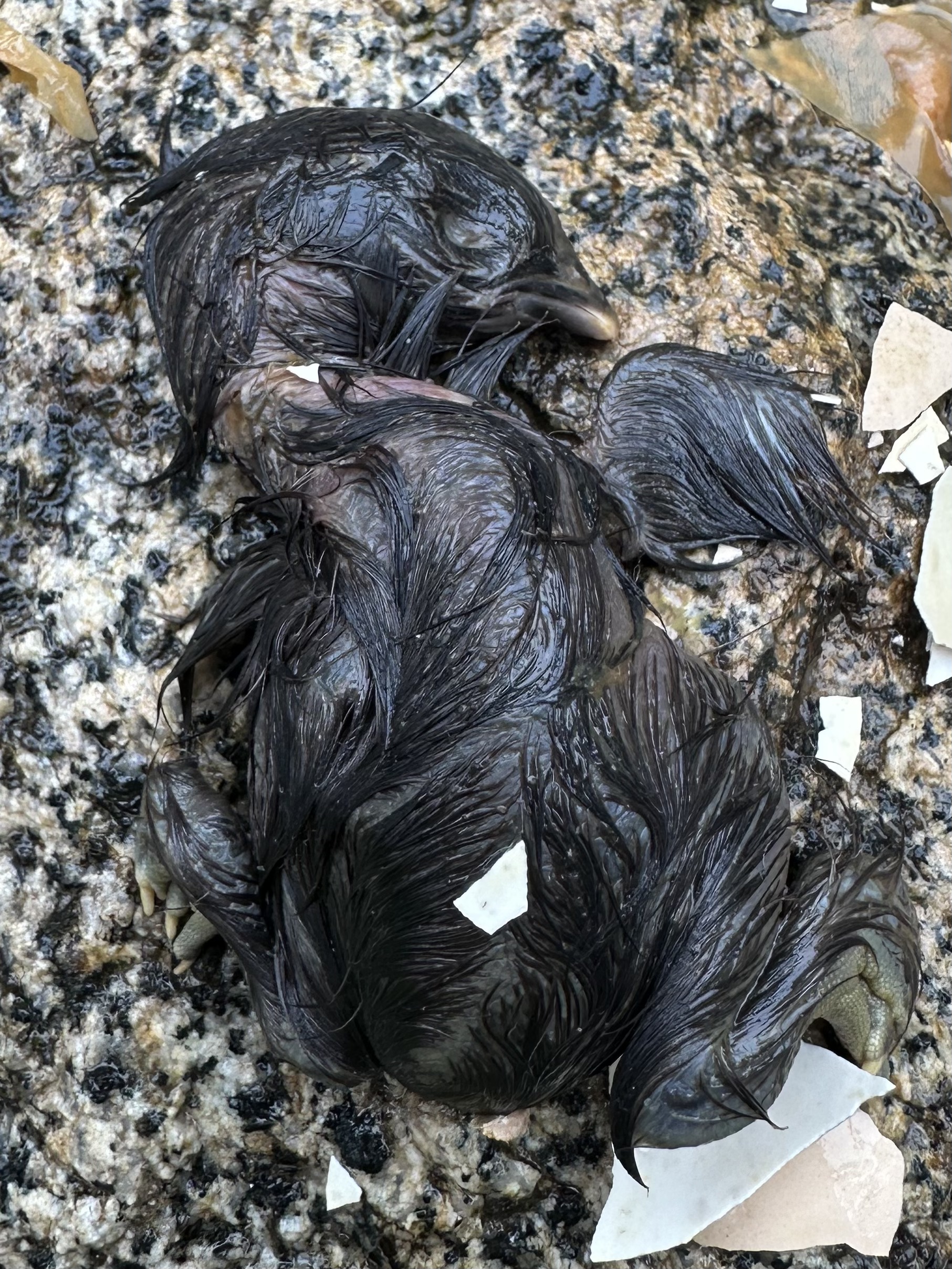
The egg was small and heavy, like a weighted ping pong ball. There wasn’t any sense of space, filled as it was with a tiny creature. There was also no life or promise in it either. I tried to crack it, but the shell peeled away in pieces, revealing a thick, rubbery orange membrane underneath. I tore open the membrane carefully, revealing dark wet feathers on an egg-shaped ball.
I guess I’d expected the chick to flop out when released from the shell like a memory foam pillow released from a plastic bag. Instead, it remained in its egg shape, wings, feet, and beak perfectly fitted together like the most intricate of jigsaw puzzles. I gently tugged the wing, and the chick unfurled, becoming a very recognizable mass of black curly feathers on a dainty and perfect body with closed eyes. It took after its dad. Fully formed, yolk sack completely absorbed, it had died within hours of being born.
I sat with the chick for a long while, the autumn sun warming my face, the other chickens cooing and clucking as they scratched for bugs. I can’t imagine what went wrong. Had it been sick? Did one of the larger birds cause it to fall out of the nest? In the way of chickens, no one was concerned, the egg forgotten as Ricki continued to sit on other eggs that possessed even less chance of successfully hatching.
In the following days, I removed any eggs on which Ricki sat like a dragon on treasure. She’d grown pale and wobbly sitting there for a month, so I made her take walks in the garden and eat. She’ll eventually forget about being broody and return to normal, hopefully not getting the urge to parent again until Spring.
Why am I telling this story now, complete with its gruesome details? Because even in chicken brains, there is hope. There is an understanding of potential, nurturing, and timing. And also of viability – that moment when you realize what you want is no longer possible, and you must let go.
Somewhere in this story, I find my human life mirrored. The tendrils that connect me to that which nourishes. The dogged persistence of process, the waiting for the barely perceptible vibration of life emerging or the solidity of a promise broken. And the impetus to do it all again.


 Robyn Lynn
Leave a comment